Chinatown · Kreta Ayer
The British Barbers
Address37A Kreta Ayer Road, Singapore 089001
Visit the site →
A proper guide to the barbershops in Singapore that take the craft seriously: where to sit, what each one does well, and the cut worth asking for. Put together by people who spend their days at the chair, not behind a keyboard.



Any barber can tell pretty quickly who around them is doing the work properly, and Singapore has a good few who are.
This is our attempt to write that down honestly. It isn't a directory thrown together for search engines, and it isn't a list of whoever shouts the loudest. It's an account of the shops we actually rate, described fairly and in plain terms, by people who know the difference between a good cut and a merely tidy one.
Every shop here is a real, working barber. We link through to each one so its own work speaks for itself, and we rank on the strength of the craft, not on who shouts the loudest.
How well the hair is read, shaped, and finished — and whether it holds its line as it grows out, not only on the day.
The traditional skills — scissor-over-comb, the razor finish, beard work, the hot towel — done properly rather than for show.
Whether the place is run with care — unhurried, considered, a room a man is glad to sit in.
A standard held across every chair and every visit, not only when the owner is in.
Five shops worth the chair, with where to find each. No paid places and no invented faults — just barbers who get it right.
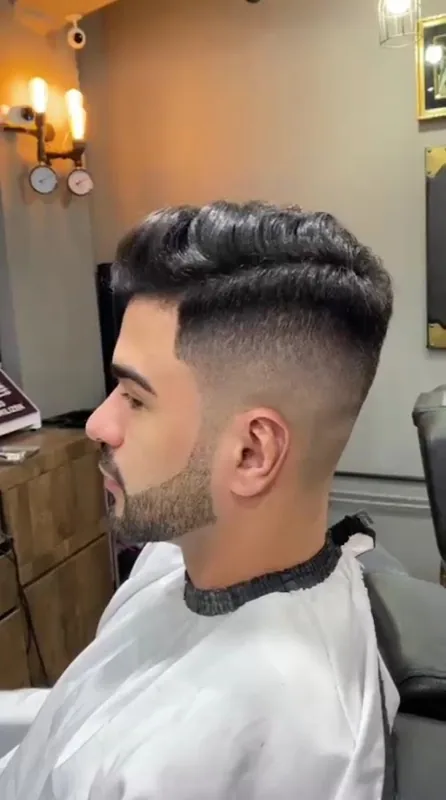
The styles men are actually asking for in Singapore right now, and more to the point, who each one suits.
Short at the back and sides, but cut with scissors instead of clipped down to the skin. You get a softer, more grown-up finish with a bit of texture left on top. It's quietly taken over from the hard skin fade for men who'd rather look put-together than sharp-edged.
Suits fine to medium hair · most face shapes · the office and beyond
The top is left a little longer and pushed forward into a light fringe, with the weight thinned out so it falls on its own. It's kind to a high forehead and suits a longer face, and it looks relaxed without looking messy.
Suits straight to wavy hair · longer or oval faces
The one that never really goes away: a clean parting, tapered sides, and enough length on top to comb over. Done well, it's about as versatile as a men's cut gets, as at home in a meeting as at a wedding. If it's coming back, it's because men want to look grown-up again.
Suits straight to lightly wavy hair · most faces · formal settings
If your hair curls or coils, the shift lately is away from the tight fade and towards a softer taper that lets the curl sit the way it naturally wants to. The shape is built around the curl instead of fighting it, which is the difference between a cut that works with your hair and one you battle every morning.
Suits curly and coily hair · rounder and square faces
The big lockdown beard is mostly gone now, replaced by something shorter and properly shaped. The neckline sits where it should and the cheek line is softened rather than carved in hard. A good barber shapes it to your jaw, not to a stencil.
Suits most beard growth · pairs with almost any cut above
A bit more length all over, dressed back with a matte product. It's for the man who's done with the very short crop but doesn't want to go long. It needs a barber who can layer properly, and a tidy every couple of weeks to hold its shape.
Suits medium hair with some body · oval and square faces
A short, honest shelf. What each type of product is actually for, so you buy the one your hair needs instead of the one with the loudest label.
A soft, low-shine clay is the one product that covers most modern cuts. It holds a crop or a side part in place without the wet, plastered look you get from old-school gel. Warm a little between your palms and work it through dry hair.
It's really more about the skin under the beard than the beard itself. A few drops soften coarse hair, calm the itch of the early weeks, and keep the whole thing looking looked-after. Put it on after a shower while your skin is still a little damp.
The difference between a shave that leaves you sore and one that doesn't comes down mostly to prep: warmth, a pre-shave oil, and a brush to lift the hair before the blade. Worth knowing even if you keep a clipper at home for the weeks in between.
One more thing: we'll happily point you to a good product whoever makes it. That's part of what makes a guide worth reading.
Come with clean, dry hair if you can. It lets the barber see how it actually falls and cut to that. Most good shops will wash it for you anyway, but turning up with a day-old style full of product makes it harder to read.
Quick version: round faces suit height on top and shorter sides; longer faces suit a bit more weight and a fringe to break up the length; strong square jaws take a softer, textured finish; oval faces get away with most things. Honestly though, any barber worth sitting with will tell you this in about thirty seconds just by looking at you, so ask them.
A taper gradually shortens the hair around your ears and neckline but leaves some length. It's the subtle, grown-up option. A fade takes that same gradient much shorter, often right down to the skin, for a sharper contrast. A taper is the safer, more versatile pick; a fade makes more of a statement and needs topping up more often.
For a short, sharp shape, every two to three weeks keeps it looking deliberate. For something longer or grown-out, every four to six. The tighter the cut, the sooner it starts to show growth. That's the trade-off for looking crisp.
Depends on the shop. The busier, appointment-led places fill up early, and just turning up on a Saturday rarely works out. Booking ahead is the sensible move, and it means the chair is actually ready when you arrive.
Bring a photo if you have one. It clears up more than any description can. If not, tell them the finish you are after (tidy, textured, grown-out) and how much upkeep you are willing to do, and let the barber take it from there. A good one will tell you straight whether it will actually suit you.